
In this guide
Your next steps
- Describe the creative element without explaining it yet.
- Link the observation to its comparison and outcome.
- Look for independent support and contradictions.
- Write a specific next-test brief.
A winning ad is not yet a reusable learning
Make another ad like this is not a useful production brief. Copying a winner’s hook, color, format and offer together leaves you unable to tell which element mattered.
Avoid the opposite shortcut too: questions always win is broader than one comparison can support. A useful learning states an element, outcome, context and evidence.
1. Separate observation, result and hypothesis
The product appears in the first frame is observable. The opening increased trust is an explanation that needs evidence. Keep those layers distinct so persuasive language does not become proof.
| Layer | Example note |
|---|---|
| Observation | The product demonstration starts before the headline appears. |
| Result | Purchase rate was higher in this comparison window. |
| Hypothesis | Showing the use case early may help qualify attention. |
| Next test | Keep the offer and audience stable; vary the opening sequence. |
2. Keep a small, consistent evidence record
Use clear labels for openings, promises, proof, offers, formats and calls to action. Avoid near-duplicate tags, but do not merge a curiosity question with a scarcity claim just because both are headlines.
- Save the source ads and comparison, not just the conclusion.
- Record the product, audience, metric and event volume.
- Note what changed together and any delivery limitations.
- Separate supporting, contradicting and inconclusive evidence.
3. Look for independent support
Three reports about the same ad pair are still one underlying comparison. CTR and a cost metric derived from the same clicks are related evidence, not independent replications.
A CTR signal can support an attention hypothesis without proving a purchase improvement. Seek a comparable follow-up test. Study losses too: they may identify the audience, offer or product where a pattern stops transferring.
4. Turn the pattern into a testable brief
Replace curiosity works with: question-led openings are a candidate for our prospecting ads; support is stronger for clicks than purchases; next we will hold the offer stable and test purchase rate.
Give the brief a creative instruction and an evaluation plan. When several elements changed in the source ads, the evidence concerns the package, not an isolated component. Preserve that limitation.
Organize the learning loop in scale190
AI creative insights help describe ads. Learnings organizes developing and established patterns with confidence and support. Actions brings recommendations from comparisons and reports into a reviewable list.
Read source evidence behind the wording. Confidence is conditional on the account and data; recommendations remain suggestions. scale190 does not publish changes or pause ads.
A spreadsheet can support the same discipline. The workspace helps when maintaining source links takes more time than interpreting the result.
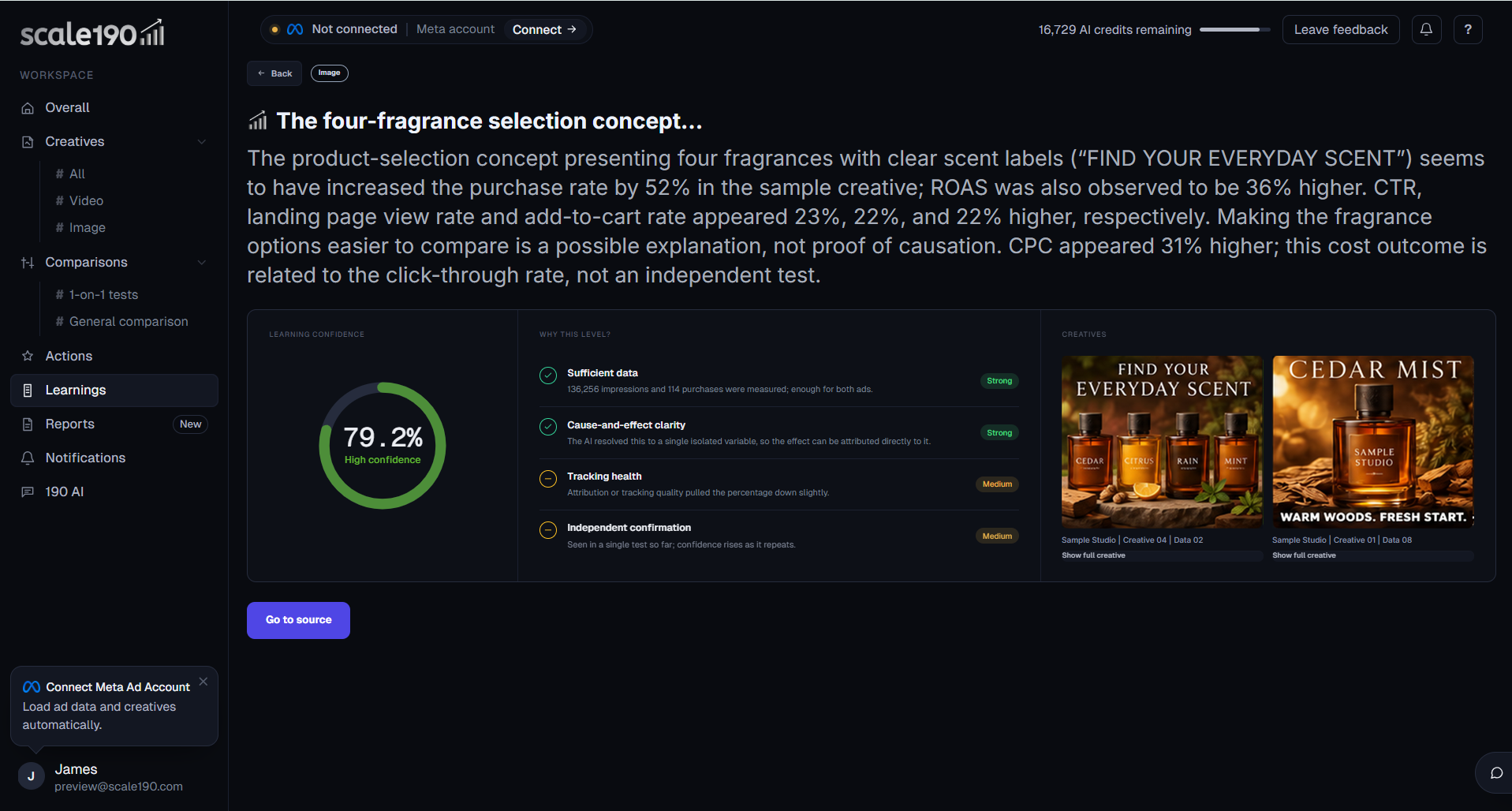
Illustrative example. The profile, creative images and learning copy have been edited; the displayed metrics explain the interface and are not verified results for the fictional creative.
Open full-size screenshotSources & further reading
Worked examples are hypothetical. References provide further methodological background.
- Meta Blueprint: creative tests and measurement studiesChoose a study that matches the measurement question.
- NIST: tests and confidence intervalsInterpreting evidence beyond a point estimate.